Workers gather in a tight circle near a scaffold, hard hats on, clipboards in hand. A supervisor holds up a wrench and starts asking questions: “Have you checked your gear today? Seen any frayed cables? Anyone notice something off with the lift?” This isn’t a formal meeting. It’s quick, focused, and urgent. It’s a toolbox talk—and it could save a life.
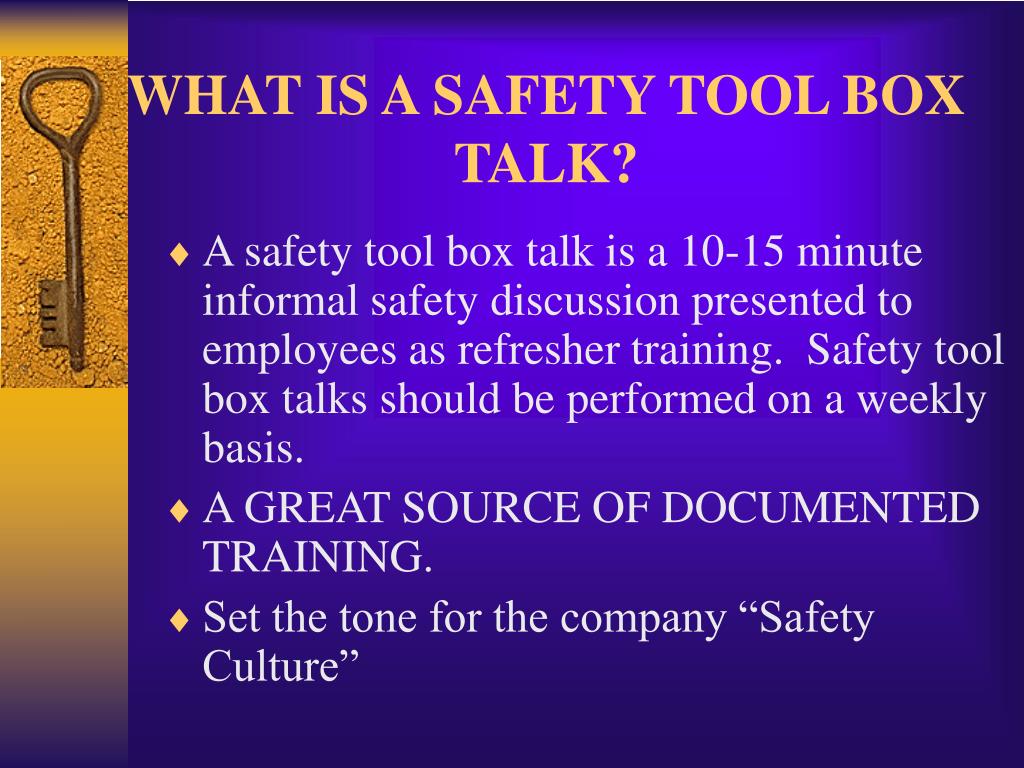
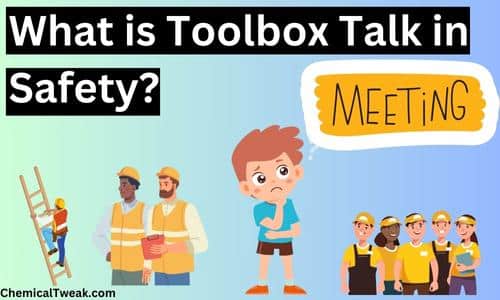
At its core, a toolbox talk is a short, informal safety meeting held at the job site to discuss specific hazards, procedures, or safety concerns relevant to the day’s work. But that definition barely scratches the surface. The meaning of a toolbox talk goes beyond a meeting—it’s a cultural habit, a communication lifeline, and a frontline defense against accidents.
Despite being widely used across construction, manufacturing, utilities, and oil and gas, the concept is often misunderstood. Some treat it as a box-ticking exercise, while others leverage it as a dynamic tool for real-time risk mitigation. Understanding what a toolbox talk truly means—and how to get it right—is critical for any safety-conscious organization.
The True Meaning of a Toolbox Talk
The term “toolbox talk” originated from the image of workers gathered around an open toolbox—literally pulling gear from storage while discussing how to use it safely. But today, the meaning has evolved into a broader safety practice: a focused, timely conversation about a specific safety topic, delivered where the work happens.
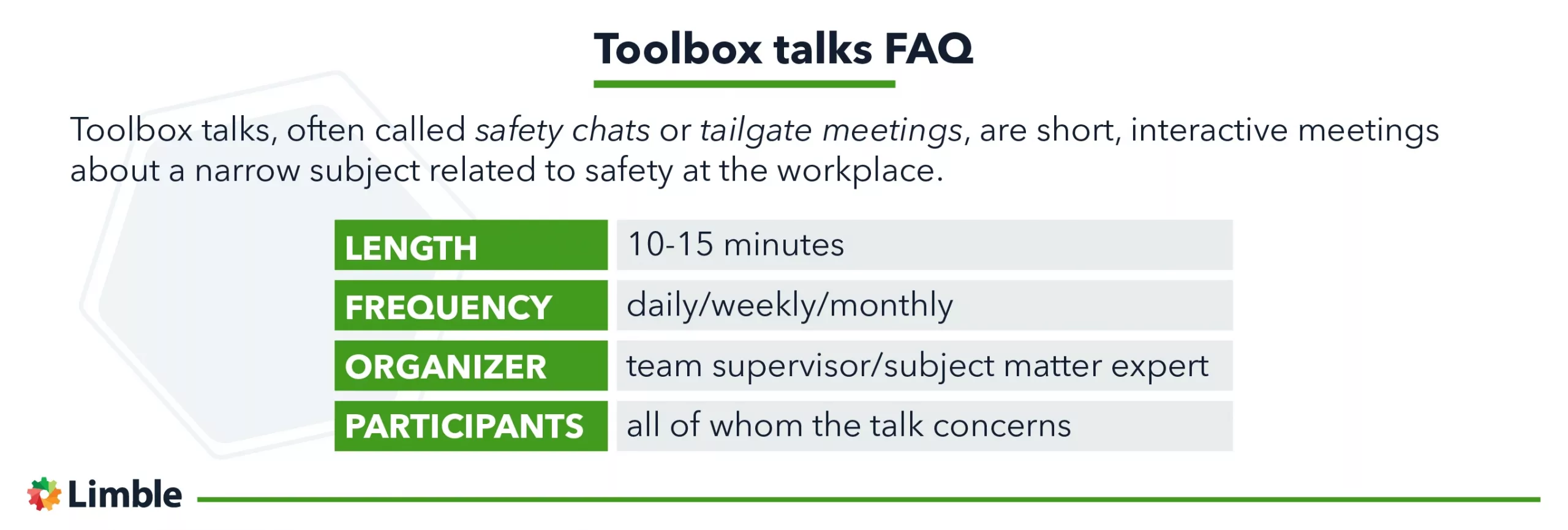
It’s not a lecture. It’s not a memo. It’s a dialogue—brief (usually 10–15 minutes), practical, and directly tied to the tasks at hand. The goal isn’t paperwork; it’s awareness, engagement, and immediate behavioral change.
What makes a toolbox talk meaningful?
- Relevance: It addresses a real hazard present that day or this week.
- Participation: Workers are encouraged to speak, ask questions, share experiences.
- Timeliness: It’s delivered just before the task begins, not days in advance.
- Simplicity: No jargon. No slides. Just clear, direct communication.
For example: A crew preparing to work at height doesn’t need a general fall protection lecture. They need a 10-minute talk on today’s anchor points, harness checks, and weather conditions. That’s a toolbox talk with meaning.
Why Toolbox Talks Matter in Workplace Safety
Safety incidents rarely happen out of nowhere. They’re usually preceded by missed warnings, ignored procedures, or assumptions. Toolbox talks interrupt that pattern.
They serve as:
- A daily safety reset – Reinforces safe behavior before work begins.
- A hazard spotlight – Brings attention to overlooked or emerging risks.
- A compliance checkpoint – Documents that safety was discussed (critical for OSHA and audits).
- A culture builder – Shows workers that safety is valued, not just enforced.
Consider this: A roofing crew starts work without inspecting their scaffolding. A near-miss occurs when a plank shifts. The next day, a toolbox talk focuses only on scaffold inspection steps. Workers share what they saw, what was missed, and how to prevent it. That conversation transforms a close call into a learning moment—that’s the real meaning in action.
Without these talks, safety becomes abstract. With them, it becomes immediate and personal.
When to Conduct a Toolbox Talk
Timing is everything. A poorly timed talk—even on the right topic—loses impact.
Best times to hold a toolbox talk:
- Before starting a high-risk task (e.g., hot work, confined space entry)
- After a near-miss or incident
- When introducing new equipment or procedures
- At the start of a new project phase
- When weather or site conditions change (e.g., sudden rain, high winds)
- During onboarding of new team members
Avoid common mistakes:
❌ Holding talks at the end of the shift when fatigue sets in ❌ Repeating the same generic topic weekly (“Hard hats save lives”) ❌ Letting supervisors do all the talking
Instead, match the talk to the moment. If a crane is hoisting a load over a walkway, talk about exclusion zones that morning, not last week.
Common Topics Covered in Toolbox Talks
The most effective talks focus on narrow, actionable topics—not broad safety themes. Examples of high-impact toolbox talk subjects:
| Topic | Why It Works |
|---|---|
| Ladder safety checks | Specific, visual, and actionable |
| Proper PPE for welding | Task-specific and immediate |
| Lockout/tagout procedure for a machine | Prevents real-time hazards |
| Heat stress signs and prevention | Seasonally relevant and life-saving |
| Spotting unsafe lifting techniques | Encourages peer observation |
A common mistake is choosing topics too broad (“Workplace Safety 101”). Instead, drill down: “How to inspect a fall arrest harness before use” is better.
Use real incidents to guide topics. If someone tripped over a hose yesterday, today’s talk should be: “Housekeeping: Why cables and hoses must be routed safely.”
How to Run an Effective Toolbox Talk
A great toolbox talk isn’t about polished delivery—it’s about engagement and clarity.
Step-by-step best practices:
- Pick one focused topic – No multitasking.
- Keep it short – 5–15 minutes max.
- Use visuals – Hold up equipment, show photos of hazards.
- Ask questions – “Have you seen this happen?” “What would you do?”
- Encourage stories – Workers relate to real experiences.
- Confirm understanding – “Can everyone explain the bypass procedure?”
- Document it – Sign-in sheet with topic, date, attendees.
Avoid reading from a script. Instead, start with a question: “Raise your hand if you’ve ever found a crack in your safety glasses. What did you do?”
The goal isn’t perfection—it’s participation.
Real-World Examples of Meaningful Toolbox Talks
Example 1: Electrical Hazard Awareness Site: Commercial construction Trigger: New electrical panels being energized Talk: Supervisor walks crew through lockout steps, shows the exact breaker locations, and asks each worker to point out the emergency shutoff. One electrician shares a past shock incident—sparking a team-wide review of glove inspection.
Example 2: Winter Slip Prevention Site: Warehouse loading dock Trigger: First snowfall Talk: Lead worker demonstrates proper boot traction, shows where salt was applied, and asks drivers to report icy patches. Workers challenge each other: “Did you clear that step?”
Example 3: Noise Exposure Reminder Site: Metal fabrication shop Trigger: New high-decibel grinder in use Talk: Safety officer uses a decibel meter app to show noise levels, then checks each worker’s earplug fit. One employee admits he doesn’t wear them—prompting a peer discussion on long-term hearing loss.
These aren’t hypotheticals. They’re real moments where a brief conversation changed behavior.
Pitfalls That Undermine the Meaning of a Toolbox Talk
Even with the best intentions, toolbox talks can fail. Watch for these red flags:
- Compliance theater: Doing it just to sign a form, not to communicate.
- One-way delivery: Supervisor talks, workers zone out.
- Repetition without relevance: Same topic weekly with no variation.
- No follow-up: Hazard discussed, but not corrected.
- Poor documentation: Missing sign-in sheets or unclear topics.
When talks become routine, they lose meaning. Workers detect insincerity. The fix? Rotate facilitators, use real site conditions, and act on feedback.
One crew reduced incidents by 40% simply by letting different workers lead talks each week—boosting ownership and engagement.
How Toolbox Talks Fit into a Larger Safety Program
A toolbox talk isn’t a standalone fix. It’s one thread in a larger safety fabric.
It works best when:
- Linked to training: Reinforces formal safety courses.
- Supported by leadership: Managers attend and participate.
- Integrated with inspections: Findings from site walks become talk topics.
- Backed by action: Issues raised are addressed immediately.
Think of it as the “pulse check” of your safety culture. If talks are lively and solution-focused, safety is likely strong. If they’re silent or rushed, there’s work to do.
OSHA doesn’t mandate toolbox talks by name, but they align with requirements for hazard communication, training, and employer responsibility. In audits, documented talks demonstrate due diligence.
Make Toolbox Talks Meaningful—Every Time
A toolbox talk is more than a meeting. It’s a moment of connection, a shared commitment to going home safe. Its meaning lies not in the words spoken, but in the actions that follow.
To get it right: keep it real, keep it brief, and keep workers in the conversation. Use near-misses as fuel. Let frontline voices lead. And never let it become routine.
Start tomorrow: gather your team, point to today’s biggest risk, and ask, “What are we doing about it?” That’s not just a talk. That’s safety culture in motion.
FAQ
What is the main purpose of a toolbox talk? To deliver a focused safety discussion on a specific hazard or task, promoting awareness and safe behavior just before work begins.
How long should a toolbox talk last? Ideally 5 to 15 minutes—long enough to communicate clearly, short enough to maintain attention.
Who should lead a toolbox talk? Typically a supervisor or safety officer, but rotating facilitators (including workers) can boost engagement.
Do toolbox talks need to be documented? Yes. A sign-in sheet with date, topic, facilitator, and attendees supports compliance and tracking.
Can toolbox talks reduce workplace incidents? Yes. When done consistently and meaningfully, they increase hazard awareness and encourage proactive safety behavior.
Are toolbox talks only for construction? No. They’re used in manufacturing, utilities, transportation, and any high-risk industry.
What’s the difference between a safety meeting and a toolbox talk? Safety meetings are broader and may be held off-site. Toolbox talks are brief, task-specific, and held at the worksite.
FAQ
What should you look for in What Is a Toolbox Talk Meaning and Why It Matters? Focus on relevance, practical value, and how well the solution matches real user intent.
Is What Is a Toolbox Talk Meaning and Why It Matters suitable for beginners? That depends on the workflow, but a clear step-by-step approach usually makes it easier to start.
How do you compare options around What Is a Toolbox Talk Meaning and Why It Matters? Compare features, trust signals, limitations, pricing, and ease of implementation.
What mistakes should you avoid? Avoid generic choices, weak validation, and decisions based only on marketing claims.
What is the next best step? Shortlist the most relevant options, validate them quickly, and refine from real-world results.